By Kathy Chouteau
Pickles has a job to do, and it doesn’t involve a bottle of gherkins.
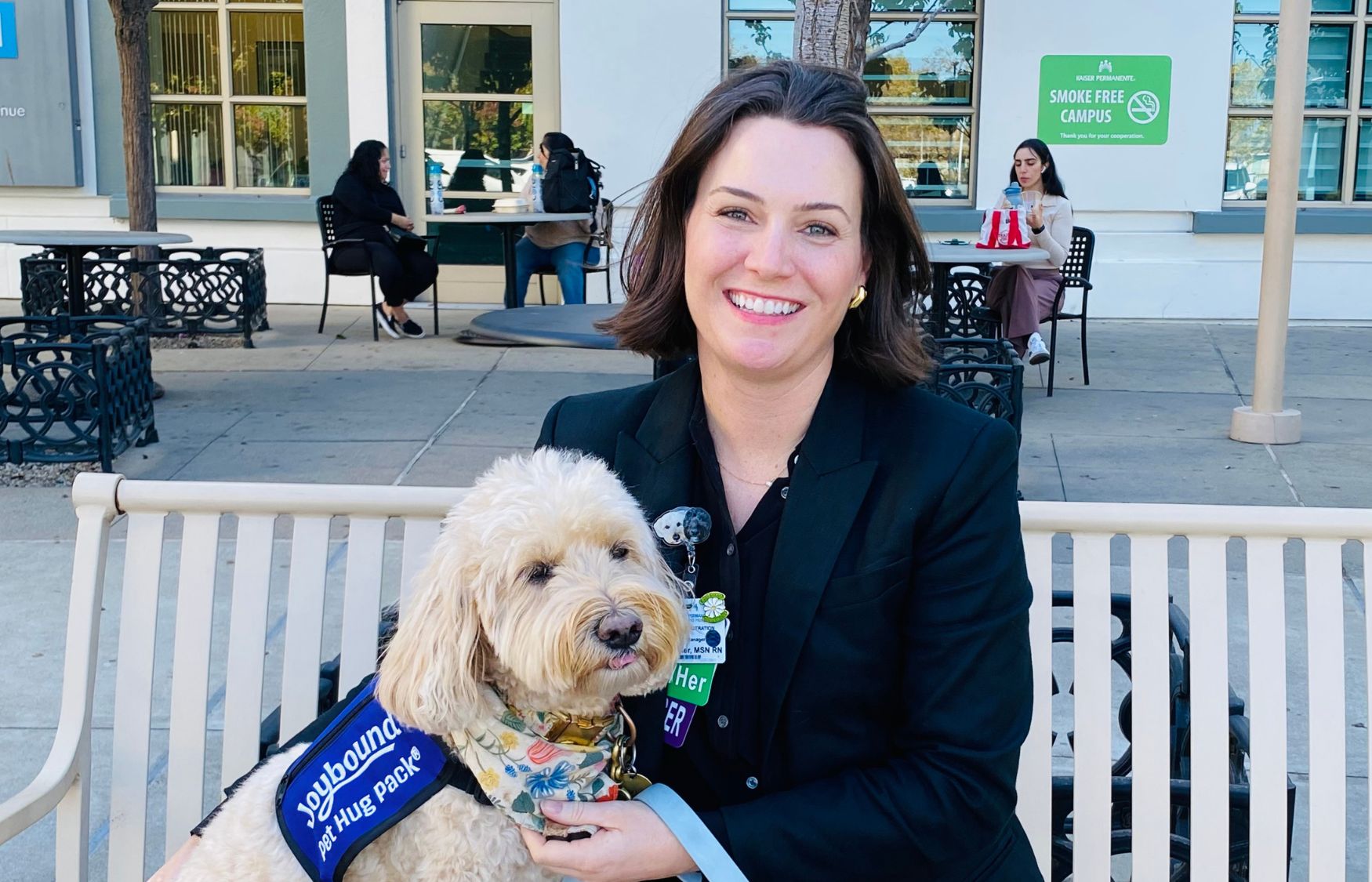
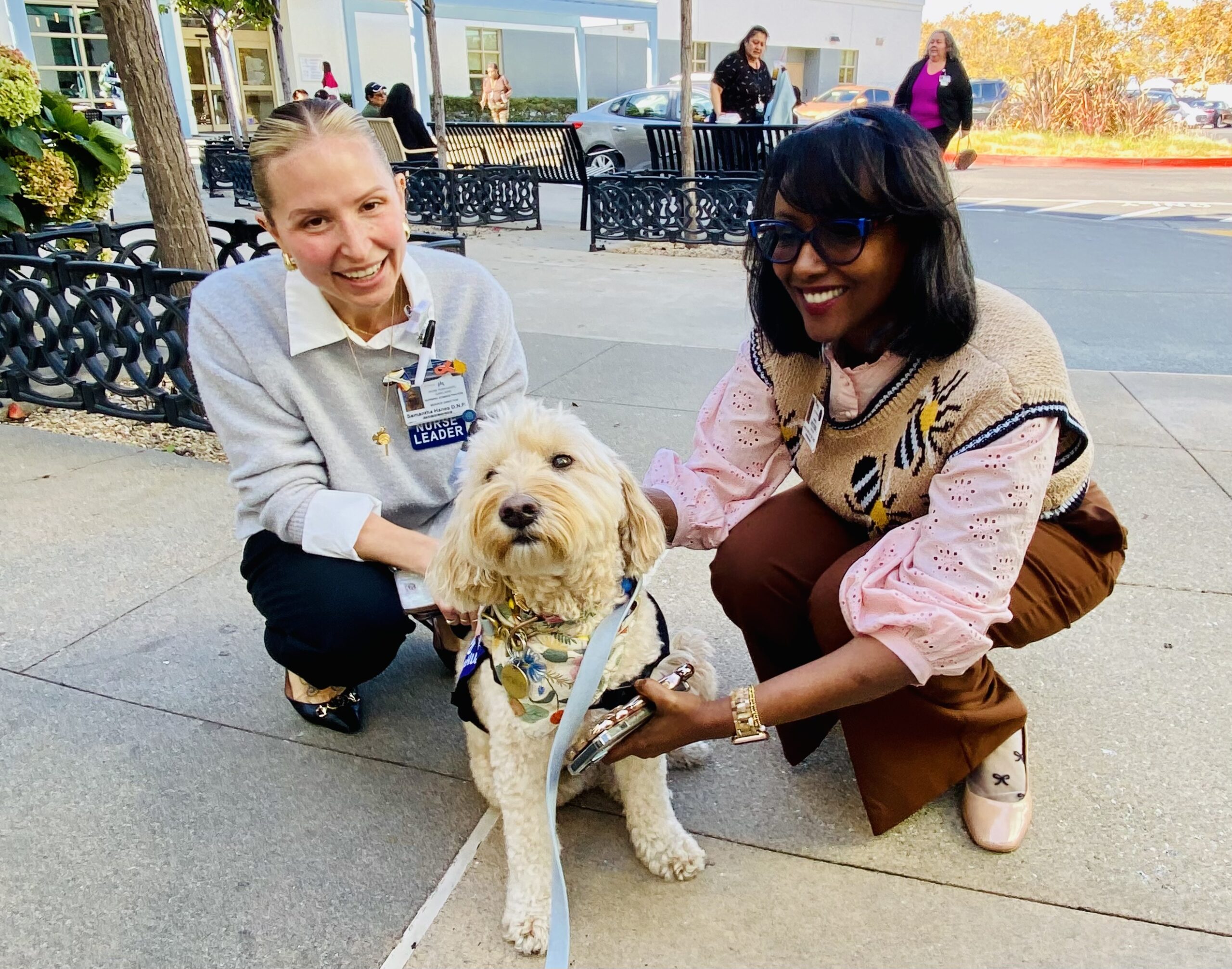
Kaiser Permanente Richmond’s new therapy dog, a seven-year-old mini goldendoodle, began visiting the hospital last month and has quickly charmed patients, staff and visitors alike. Her presence is more than just a novelty; it’s essential to the hospital’s mission of providing meaningful experiences and holistic care.
Pickles’ journey to Kaiser Richmond
Pickles debuted at the hospital’s 30th anniversary celebration on Sept. 26, and she’s been making rounds through the hallways ever since. Her human/handler, Brittany Walker, is a nurse at Kaiser Permanente Richmond. Walker describes Pickles as intuitive and joyful, saying, “She really enjoys it…she gets a lot of joy from the attention. And she is really intuitive of who wants to meet her and who would love her.”
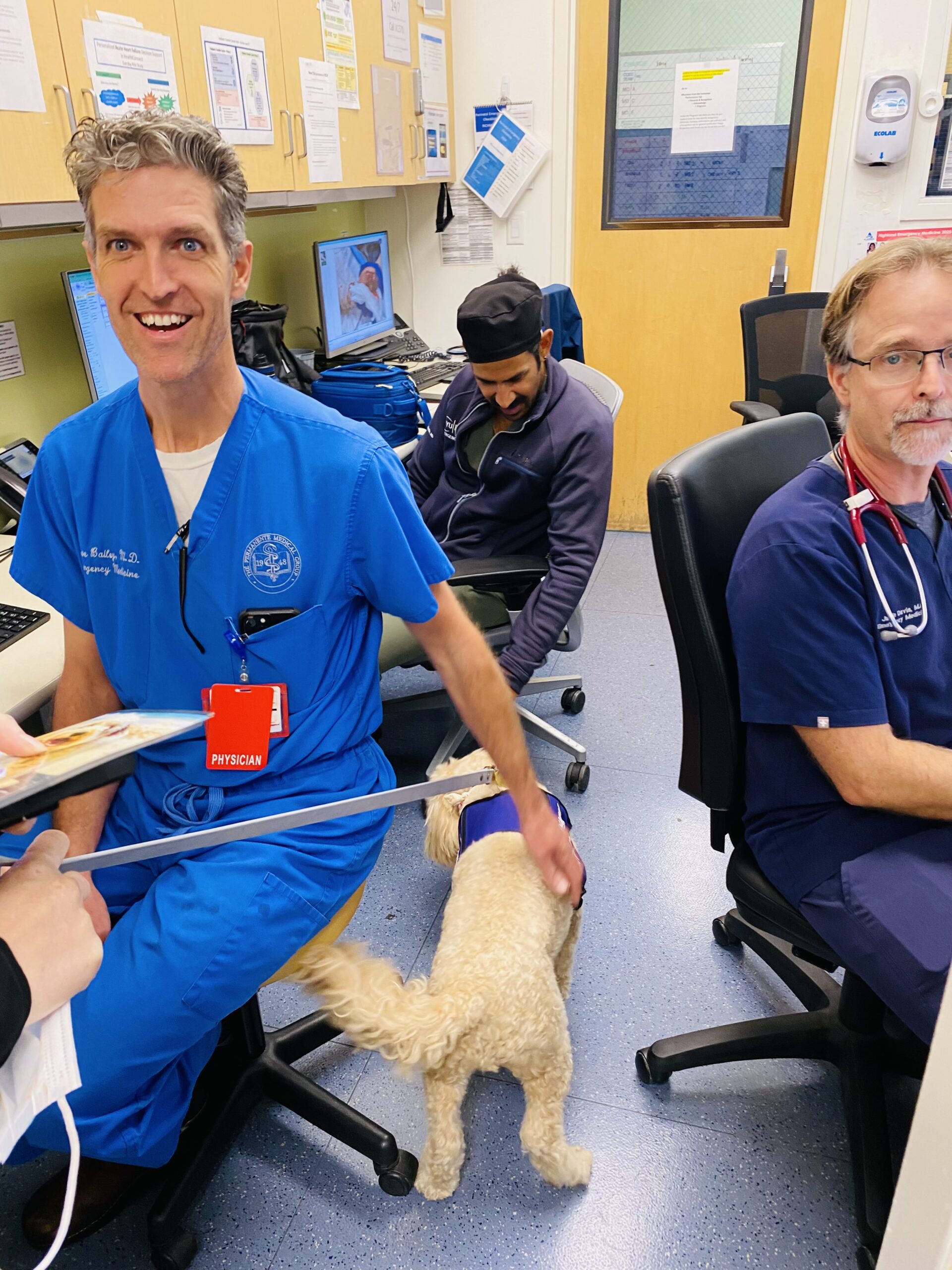
Pickles visits the hospital once a week on Thursdays, usually for an hour, making stops in the Emergency Department, Adult Family Medicine Unit and with patients recovering from surgery. She’s available to any patient who requests pet therapy.
The power of pet therapy
The benefits of pet therapy are well-documented, and Pickles is wagging proof. Therapy dogs like Pickles stimulate mental engagement and conversation, offering a welcome distraction from negative thoughts and emotions, according to Elissa Harrington, senior media relations & PR rep with Kaiser Permanente Northern California. They help boost morale, alleviate feelings of loneliness and depression and provide a range of physical, mental and social benefits. Research shows that therapy dogs can lower blood pressure and even help anxious children get their shots.
Harrington underscored that pet therapy teams are an essential service supporting Kaiser Permanente’s mission.
Training and certification
Becoming a therapy dog is no small feat. Pickles was trained by Walker, who has been working with her since she was eight weeks old. Pickles started official dog therapy training after turning two-years-old. To qualify, the goldendoodle had to pass a rigorous test of 10 commands—sit, lay, stay and more—demonstrating her ability to remain calm and focused in busy hospital environments, said Walker. She also had to earn certification as a “good canine citizen” from the American Kennel Society and pass a mock interview with Joy Bound, an organization that partners with Kaiser for pet therapy services.
Lifting spirits
During the Standard’s visit to Kaiser Permanente Richmond, Pickles interacted with numerous people, lifting the spirits of patients, nurses, doctors and other staffers alike. Kaiser’s front desk even knew Pickles by name. Walker said she picked the name “Pickles” to bring joy to people when they hear it called out.
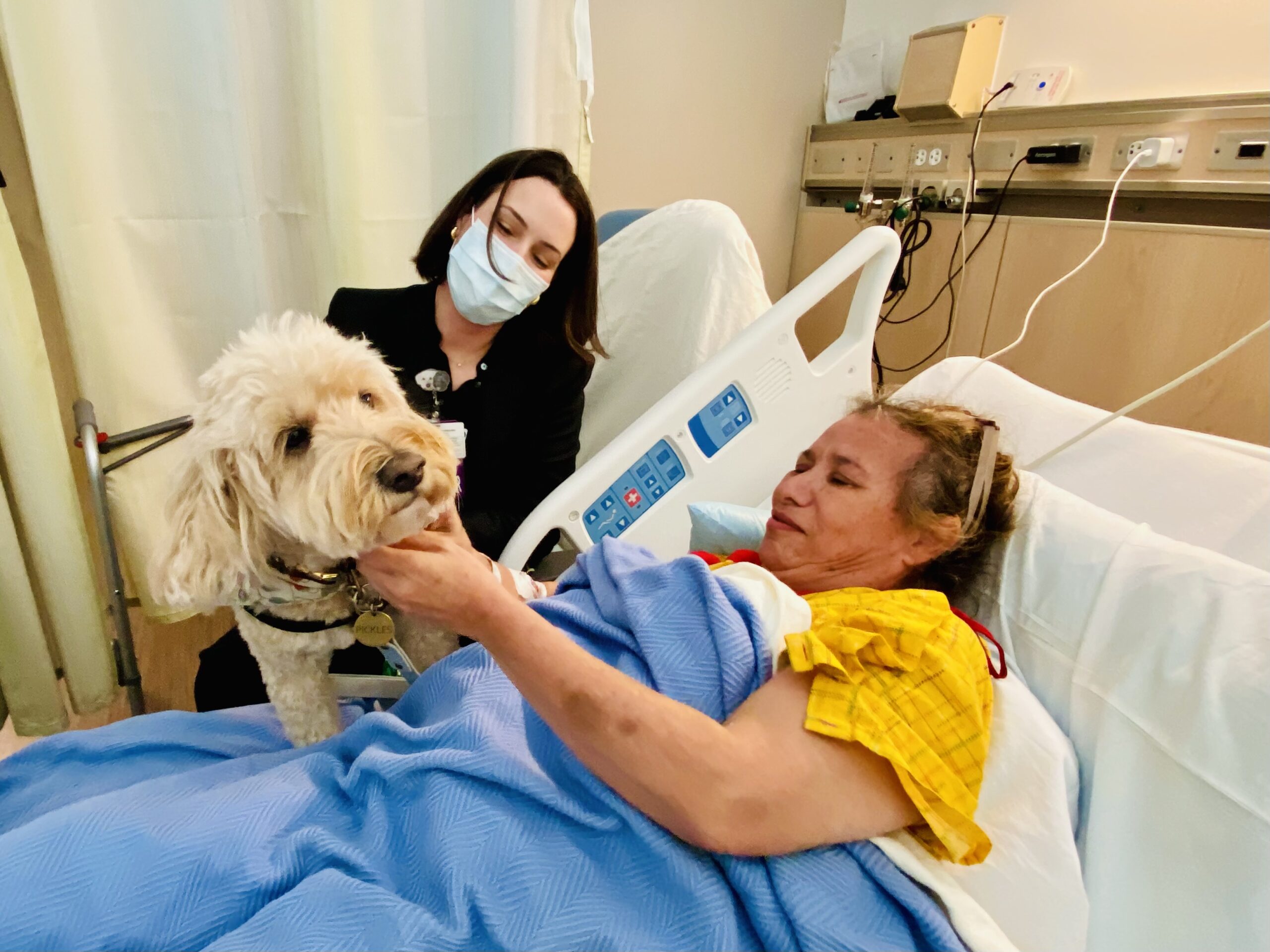 Kids often find it easier to open up around animals, expressing feelings they might not share with adults, noted Harrington. For adults, especially those facing difficult diagnoses or long recoveries, Pickles provides comfort and companionship. Walker recalled an early Pickles visit with a geriatric hospice patient. Although the patient was dying, Pickles brought delight to the dog-lover and her family.
Another patient, Socorro “Coco” Gutierrez, visited a family member at the hospital when she suffered a sudden stroke. Missing her own dogs at home, she found solace in Pickles’ visit to her hospital room while the Standard was there. Gutierrez was visibly uplifted by Pickles’ presence, describing it as making her “feel good.”
The impact of Pickles, who wears a colorful friendship bracelet around her neck from her human, isn’t limited to patients. Walker points out, “You can’t have a good patient experience if your employees and staff aren’t in a good place. So this is an opportunity to share her with the staff too. That way it creates a good environment for the patients because it’s all connected. And then she loves it. She loves the attention. So it’s kind of like a win, win, win.”
Pickles often receives treats for her good deeds around the hospital and even has a place to rest in Walker’s office when the widespread joy-making leaves her fatigued.