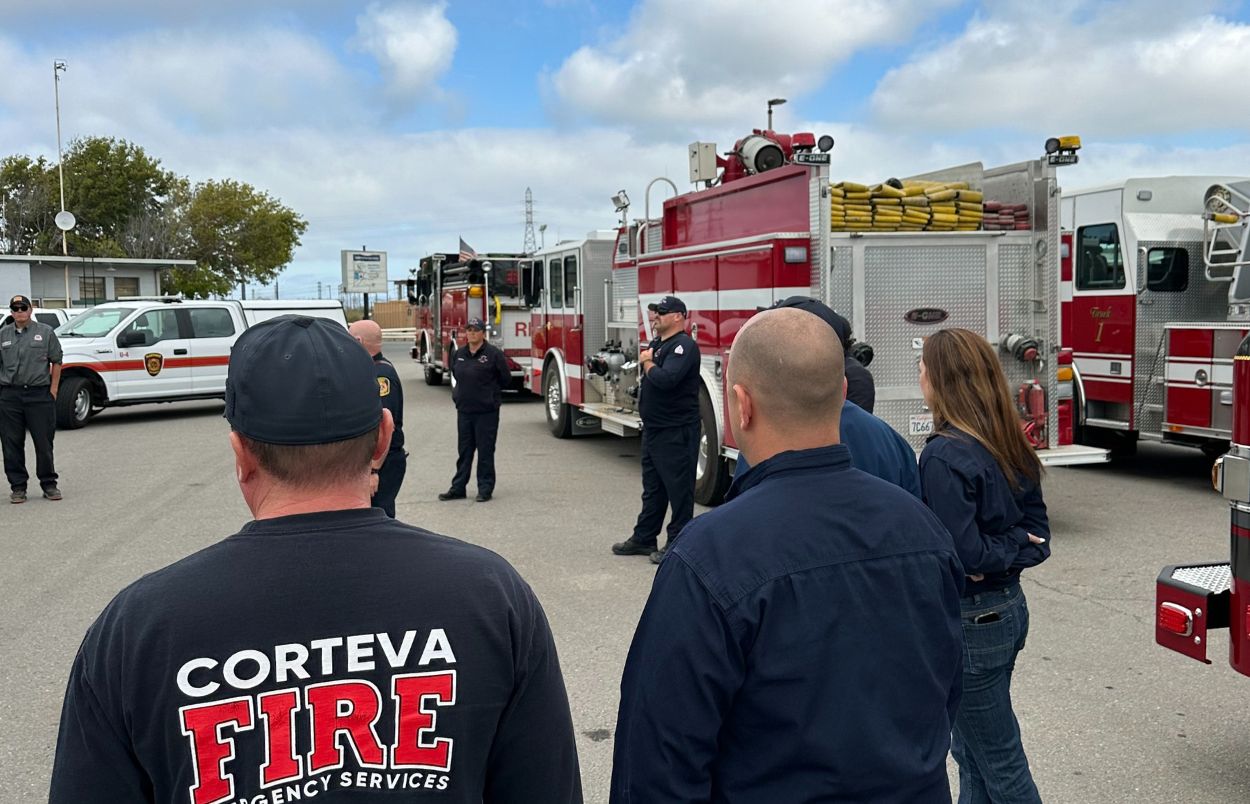
When it comes to emergency response, preparation is everything. That’s why a dozen or so industrial and municipal fire agencies recently gathered at Chevron Richmond for a quarterly Petrochemical Mutual Aid Organization (PMAO) drill.
“This particular drill focuses on staging and communication,” said Scott Joseph, Chevron Fire Department (CFD) chief. “When we get on site, we want a clear understanding of where the staging is, the comms plan, and facility familiarization for all of the different agencies coming in.”
PMAO drills aim to ensure departments can effectively work shoulder-to-shoulder during a major incident. Organized by CFD Deputy Chief Wes Dacko, the latest training on Aug. 26 walked visiting crews through Chevron Richmond’s primary staging areas and radio plans and included tours of the firehouse, apparatus and drill grounds.
Participating agencies included Contra Costa County Fire Protection District (Con Fire), Richmond Fire Department and refinery brigades from companies such as Phillips 66, Valero, Marathon and PBF, among others. The goal, Joseph said, is to make sure responders “start at the right place” and operate off the same playbook from the first minutes of a response.
For Marathon Petroleum’s volunteer brigade, which counts about 85 trained members, mutual-aid coordination is essential.
“We all need to be able to help each other,” said Mike Barber, battalion chief with the Marathon Petroleum Fire Department. “If we have a fire, it can be a big fire, and you need big water and the right people to control it and put it out.”
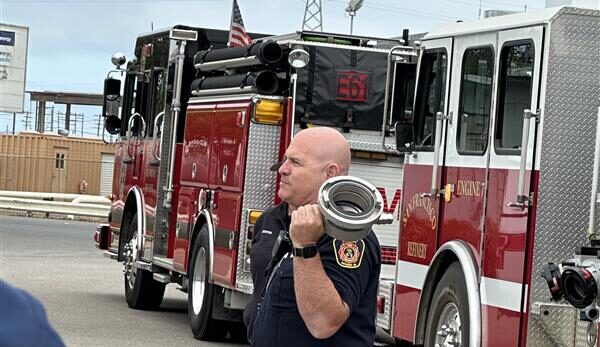 Barber noted that refinery brigades do monthly chiefs’ meetings and try to drill or tour each other’s facilities quarterly. When municipal assistance is requested off-site, responses are coordinated “through the proper channels,” he added, including PMAO dispatch and Cal OES requests, to ensure coverage at home while sending help where it’s needed.
Chevron Richmond Emergency Services Manager Meaghan Horton said the drill also reflects lessons learned from recent regional incidents.
“We hope to never have to use these folks, but if we do, just knowing they’re coming and having tested how we’ll communicate matters,” she said. “It’s also about reinvigorating the interaction between all the groups. With downsizing in some places, we’re going to be more reliant on each other than ever.”
Horton said this was the second in a renewed series of PMAO sessions hosted at local facilities, with another planned for November that will put more emphasis on equipment deployment. Joseph added that hosting duties rotate; a recent session was held at a partner facility in Brentwood, and another is slated at Phillips 66 in the first quarter of next year.
Beyond radio channels and maps, participants valued the face time.
“You’d think all refineries understand what each other does, but they don’t,” Horton said. “Getting eyes inside gives context you wouldn’t normally have. People are excited to get together, compare notes and make sure we don’t lose that connection.”