By Kathy Chouteau
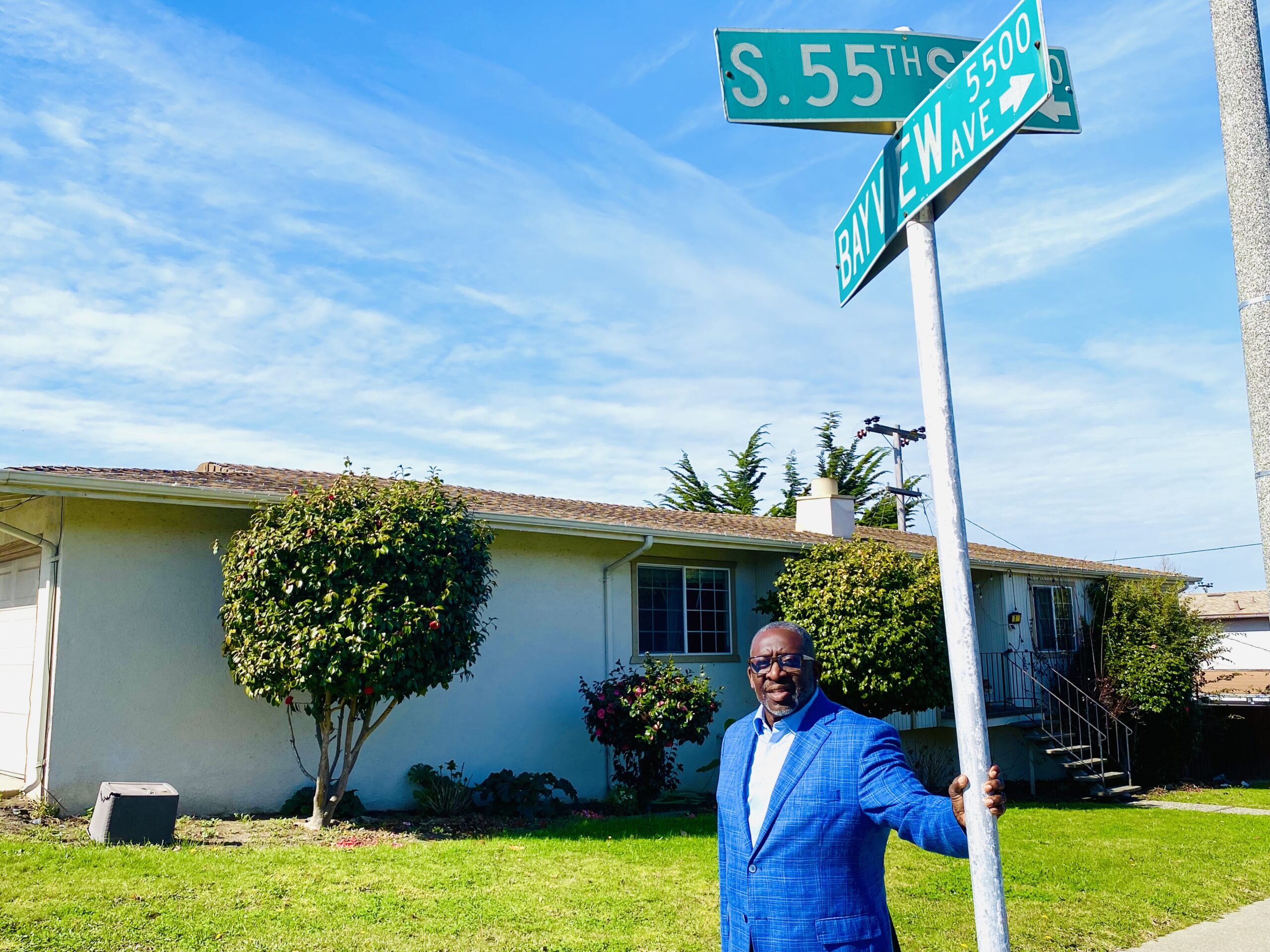
A house at the corner of South 55th Street and Bayview Avenue in Richmond stands as a significant landmark in the history of the Civil Rights Movement.
Once home to the Anderson family, including Rev. Booker T. and his wife Irma, both mayors of Richmond during their time, this house once entertained two visits from Dr. Martin Luther King, Jr. and other Civil Rights leaders in the 1960s.
The historic visits had their seeds sown in the friendship between Dr. King and the late Rev. Anderson, which started in the mid-1950s as classmates at Boston University’s School of Theology. After graduation, Dr. King returned to Georgia and Rev. Anderson to his native San Francisco, but the two remained close friends. Eventually, Rev. Anderson migrated to Richmond to become the pastor at Easter Hill United Methodist Church.
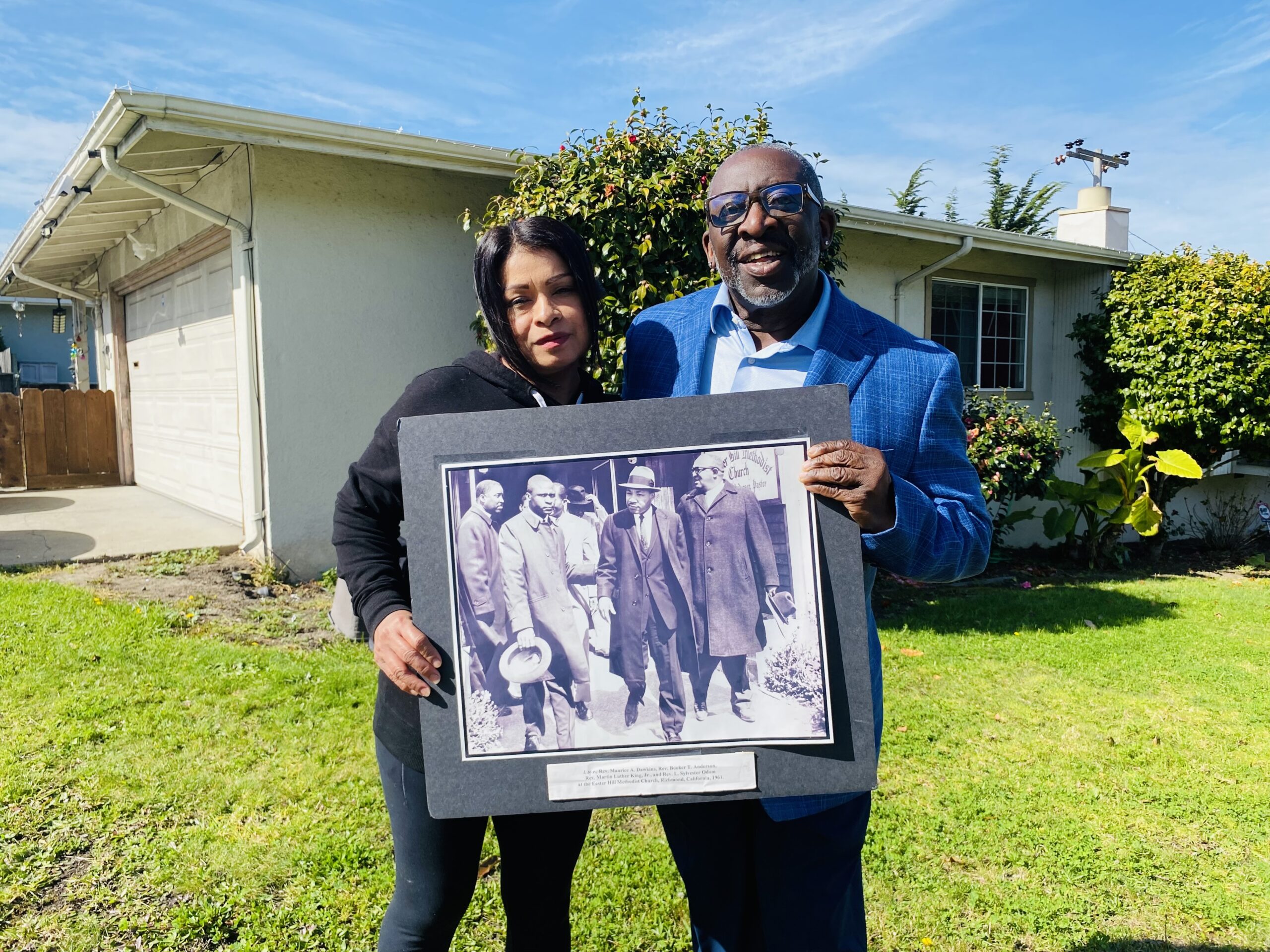
And so, when Dr. King was assembling western ministers around the burgeoning Civil Rights movement, he knew just who to call—his longtime friend, Booker T. Anderson. During his 1961 visit to Richmond, Dr. King attended the Bay Area meeting of the Western Region of the Southern Christian Leadership Conference (SCLC) at Easter Hill United Methodist Church. King had originally founded the organization to coordinate Civil Rights initiatives across the South. Also at that time, Rev. Anderson was appointed by Dr. King to serve as the SCLC’s public relations director for the Western Region.
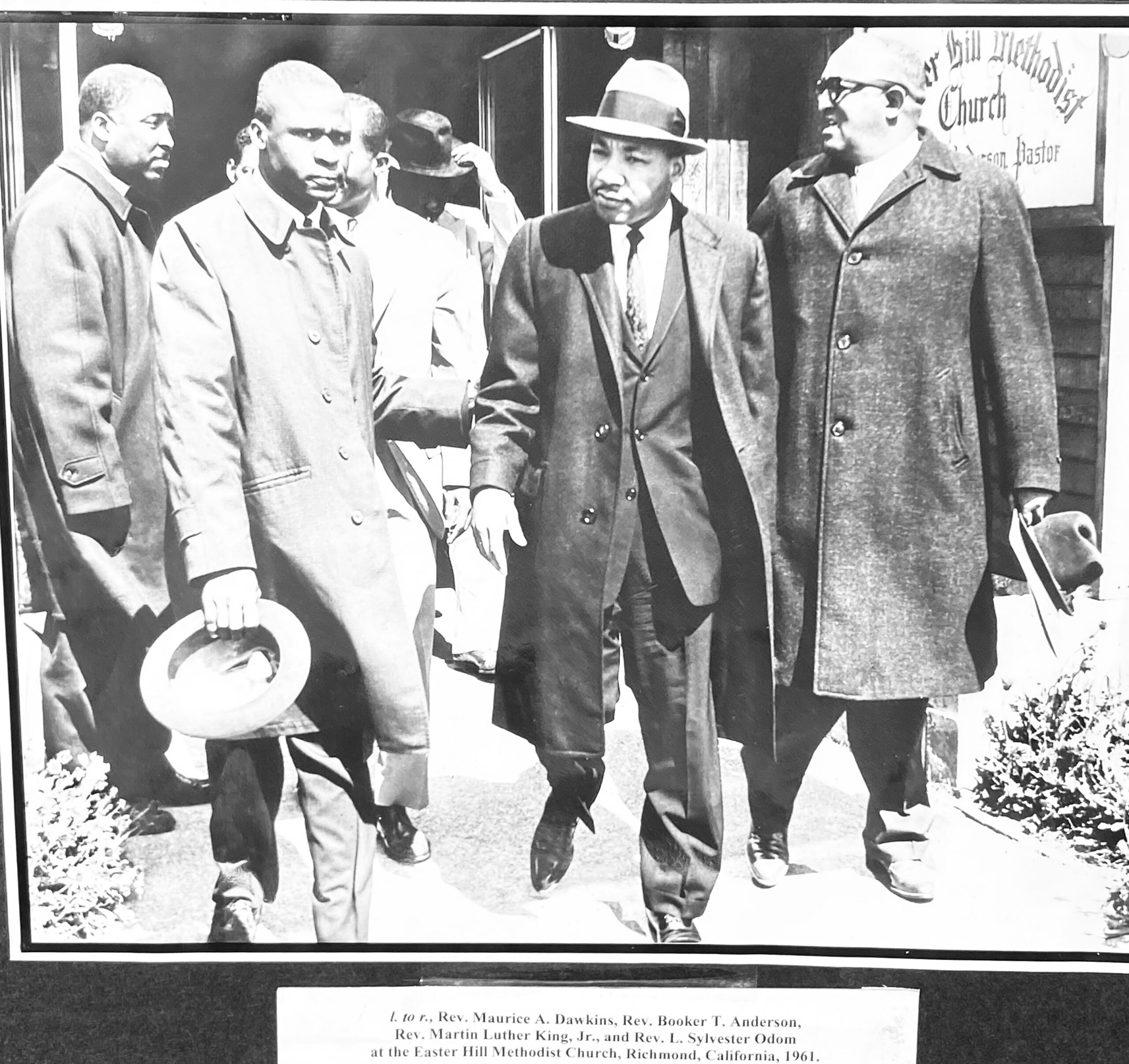
During a conversation with the late Ms. Irma Anderson preceding her passing, she said her husband’s related work at the time involved “mobilizing the ministers to get the big picture and Booker was the one who coordinated Northern California.” According to Ms. Anderson, Dr. King and her husband also spent time strategizing about “what was going to take place in the next five years…”
Ahmad Anderson, Rev. and Ms. Anderson’s son who is currently running for mayor of Richmond himself, emphasized they were especially discussing the March on Washington while in Richmond in 1961. It was during this 1963 March that Dr. King gave his legendary “I Have a Dream” speech. And the early Civil Rights Movement grew, in part, through the strategic meetings in Richmond at this time.
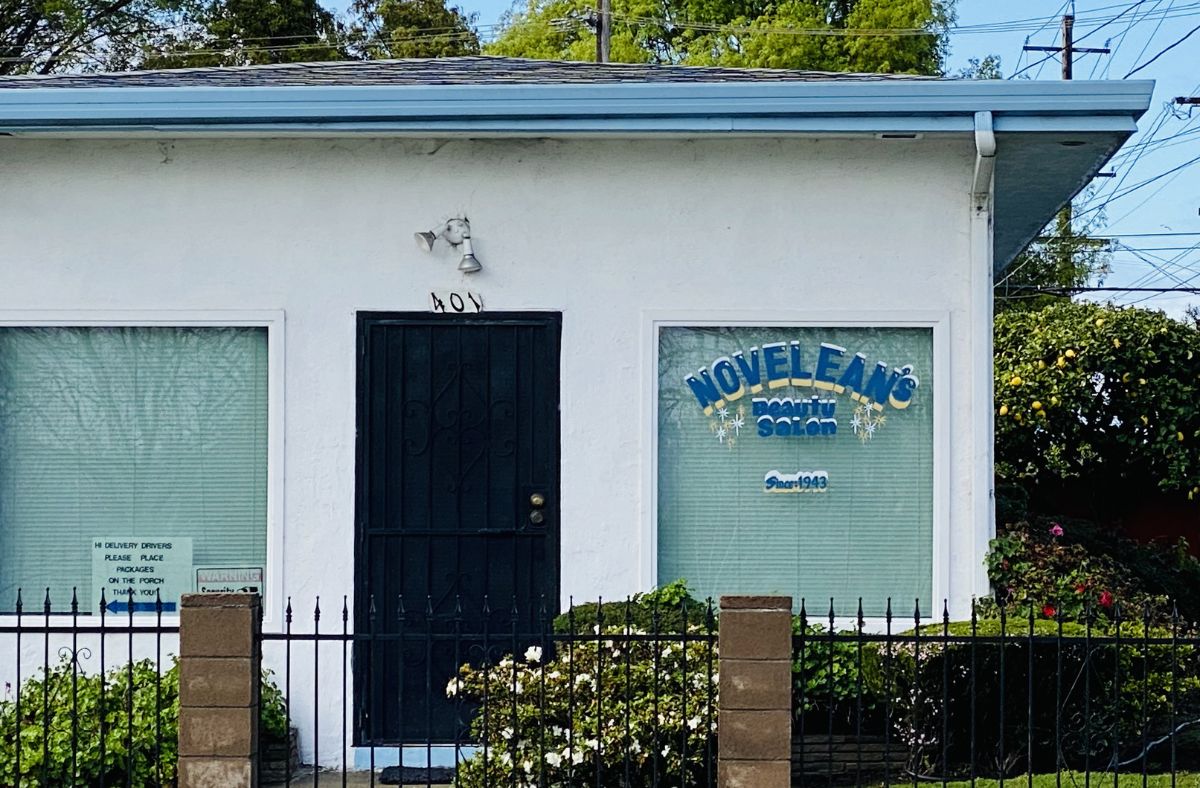
While Rev. Anderson planned to attend the March on Washington as a cabinet member of Dr. King, Ahmad Anderson recalled that, at the time, his mother, brother and he were not planning to go. His mother was asked by her friend, Novelean Harris of Novelean’s Beauty Salon (401 Harbour Way), if she planned to accompany her husband. When Ms. Anderson replied, “No,” Ms. Harris urged her, “You need to be there and take your children,” according to Ahmad Anderson. And so, Ms. Harris sponsored the trio’s trip to Washington, which saw three-year-old Ahmad and his infant brother, Wilbur, witness the famous “I Have a Dream” speech as young children with their mother.
Dr. King returned to Richmond in March 1968 and met with Rev. Anderson once again, visiting the Anderson’s then-family home on South 55th St. and Bayview Ave. along with Jessie Jackson, Ralph Abernathy and Andrew Young. Ahmad Anderson said that the 1968 visit surrounded the Western Region’s SCLC again, with a focus on peace, justice, equity, diversity and inclusion. He added that the Vietnam War was also a topic of conversation as well.
This visit would be the last time the Anderson family saw Dr. King, only one month before his assassination on April 4, 1968 in Memphis, TN.
“Maybe it was because of the life we were living in America, but even as a young boy, it was crystal clear to me what my father was doing when he traveled with Dr. King fighting for the Civil Rights of black people and all people,” said Ahmad Anderson. “How did I know that? It took up every space in which we lived in at all times.” These spaces included listening to his father on the pulpit, riding to the airport with him on his way to Alabama (Selma to Montgomery March), Detroit (Freedom March) and to the March on Washington, and it was confirmed when he saw pictures in local newspapers and his mother read to him what they reported.
During a Black History Month video before his former home, Ahmad Anderson remarked about how the impact of Dr. King’s visits with his father still resonates with him. “They spoke passionately about equity, public safety and the urgent need for affordable housing and economic opportunities for all. Tragically, just a month later, Dr. King was assassinated, but his dream lives on in me.”
He later remarked to the Standard, “The call to action is resonating in this city, not just one zip code but all zip codes.”