A number of traffic measures are being developed to deter westbound I-580 motorists from using residential streets in Point Richmond as a shortcut when the freeway becomes congested.
At its meeting Tuesday, the Richmond City Council is slated to consider approving a resolution to formally request and accept $180,000 in Regional Measure 3 (RM3) funding to support the design phase of the Point Richmond Traffic Improvements Project.
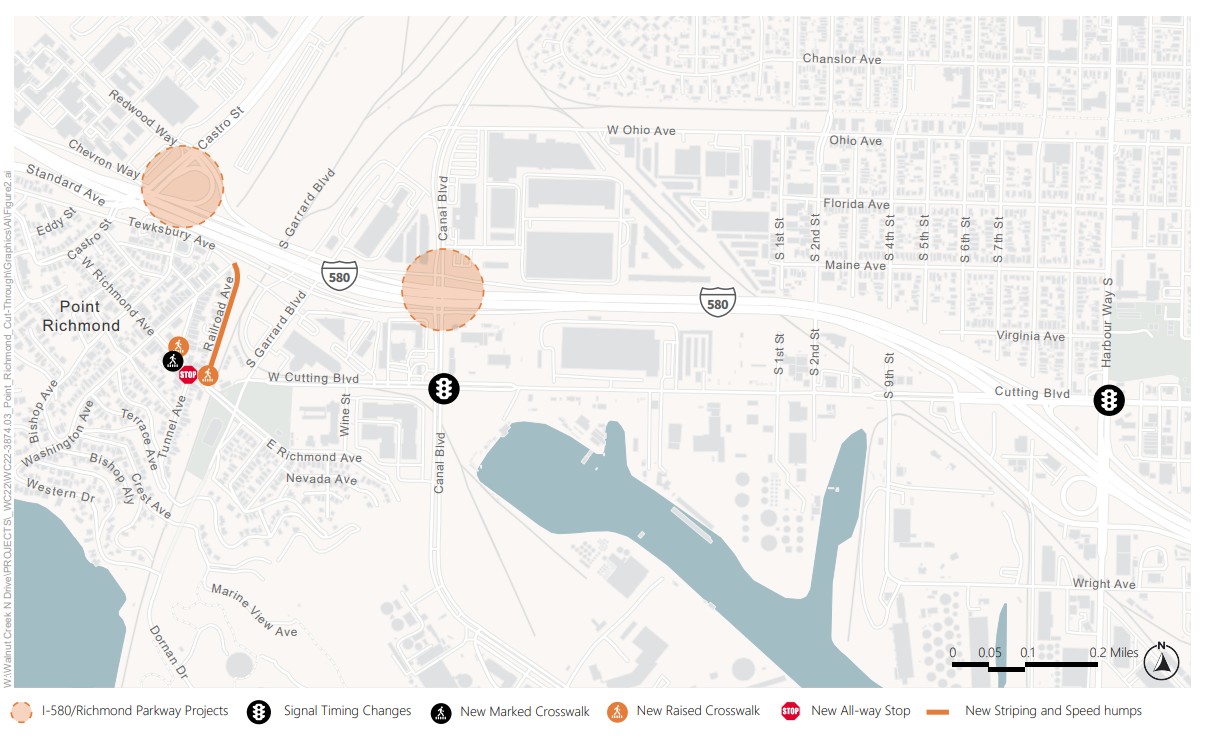
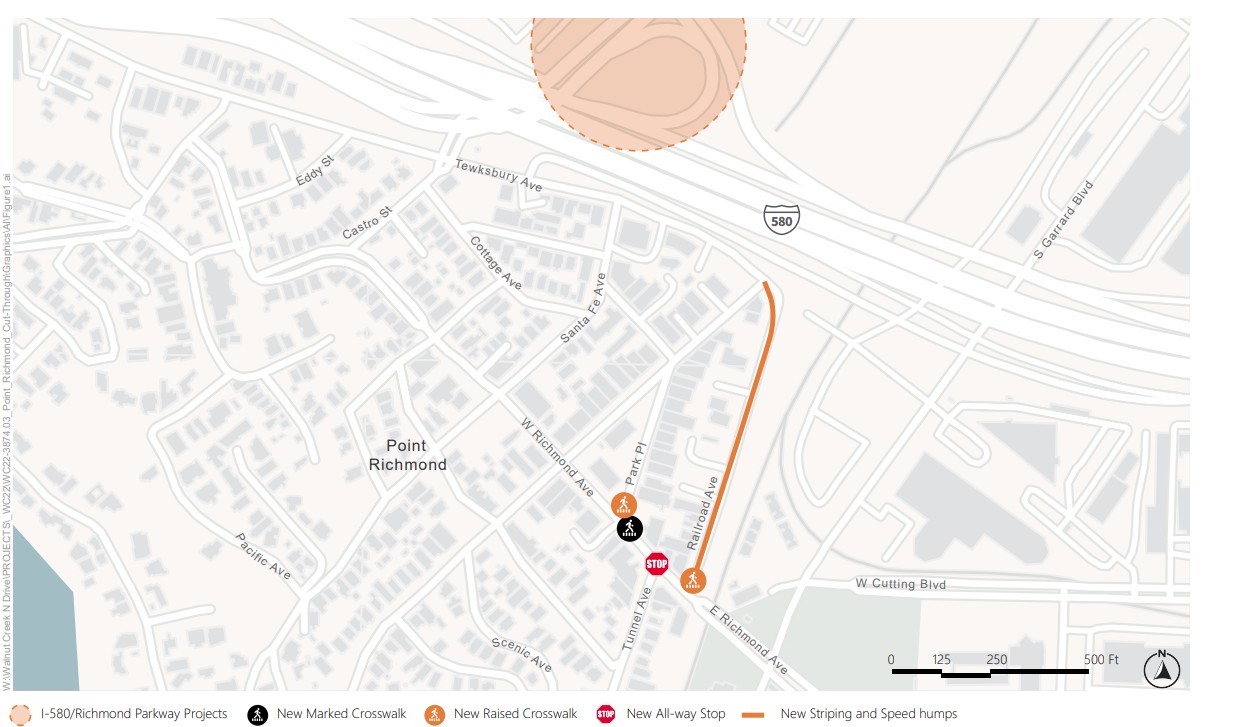
A December 2024 study by Fehr & Peers identified fixes that the city will pursue. The recomendations include adjusting signal timing on Cutting Boulevard to increase delay for cut-through turning movements; narrowing lanes on Railroad Avenue from 12 feet to 11 feet and adding a striped centerline; adding speed humps along Railroad Avenue similar to the one already present on Tewksbury Avenue; converting the pedestrian crossing of Railroad Avenue at West Richmond Avenue to a raised crosswalk; and turning the intersection of West Richmond and Tunnel avenues into an all-way stop.
“These treatments interfere with cut-through movements while avoiding conflict with key
emergency access routes from Richmond Fire Station No. 61,” the study stated.
The study found evidence of three cut-through routes during the average morning peak commute. One involves westbound I-580 cars getting off at Cutting Boulevard and using local routes through Point Richmond, such as Railroad and Tewksbury avenues, to get back on the freeway at Castro Street. Another involves vehicles exiting at Canal Boulevard and immediately getting back on the freeway. And the third involves vehicles traveling southbound on Castro Street, avoiding the left turn onto the freeway by continuing on Castro Street and approaching the on-ramp from the south via East Standard Avenue.
City staff plan to return to Council at a later date to seek allocation of funding for the construction phase.
Westbound congestion on I-580 may ease soon, as officials plan to convert the Richmond–San Rafael Bridge’s weekday bike lane back into a breakdown shoulder, while retaining bike access on weekends. Some commuters and residents are pushing to turn the third westbound span into a full vehicular lane, similar to the bridge’s eastern span.