
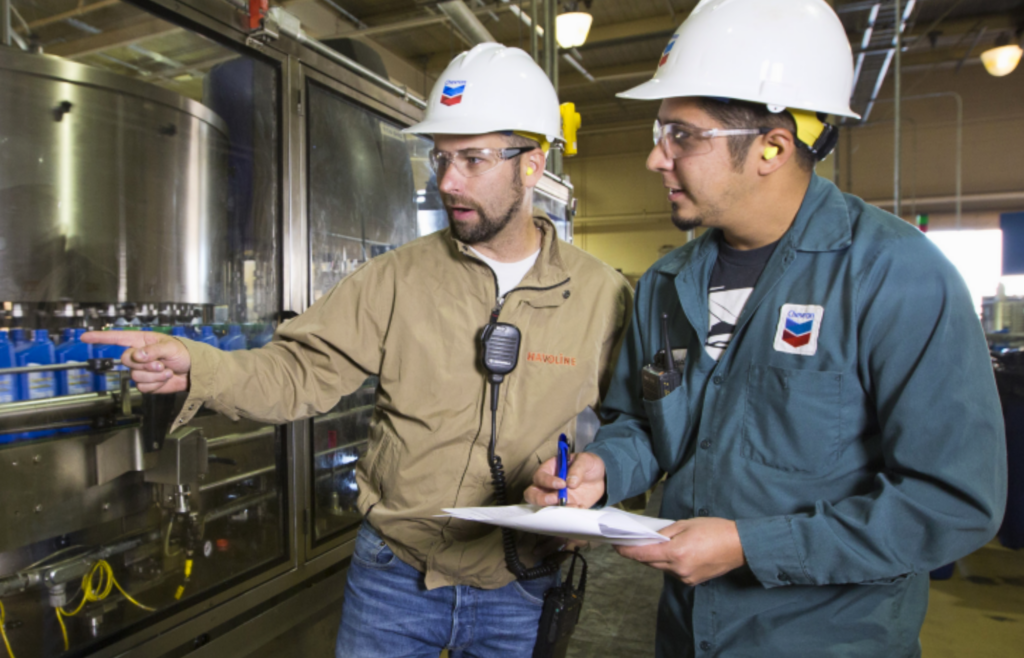
Chevron Richmond keeps Northern California moving — fueling one in five cars, supplying a majority of the jet fuel used at Bay Area airports, and operating as the West Coast’s only producer of lubricating base oils. But beyond its significant role as energy provider, the refinery plays an outsized role in powering the local economy.
A newly released report by Oxford Economics (view report here) offers the clearest picture yet of that economic impact. In 2022, the Chevron Richmond facility contributed $1.1 billion in gross value-added (GVA) to West Contra Costa County’s gross domestic product, accounting for roughly 5 percent of the region’s total GDP.
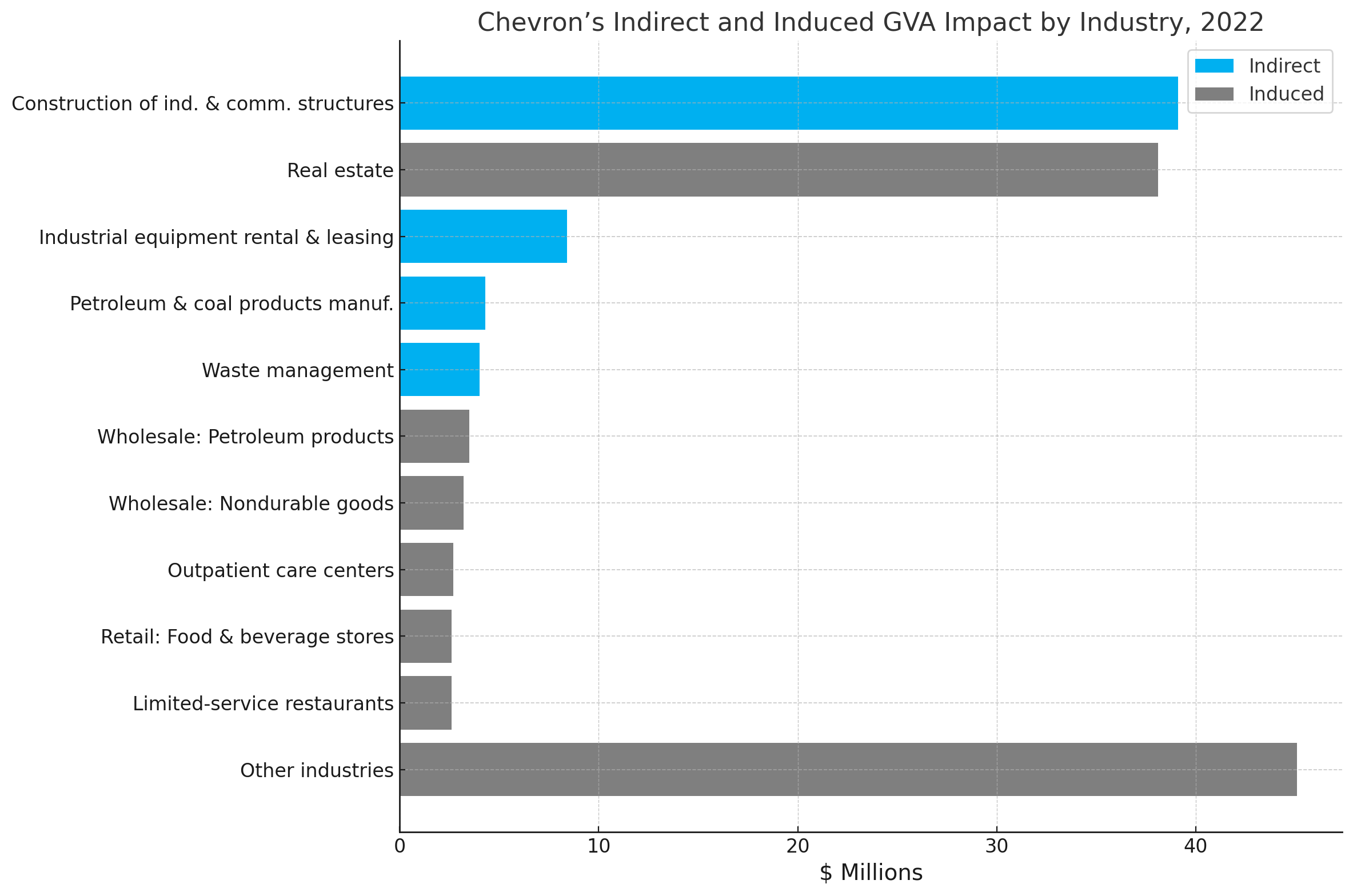
That contribution includes support for 3,830 jobs across multiple sectors, from manufacturing and technology to customer service and logistics. For every 10 workers directly employed by Chevron Richmond, the company supports five additional jobs in the region through its supply chain and local spending.
One such local supplier is Channel Lumber Company on Cutting Boulevard, which has done business with Chevron Richmond for more than 55 years.
“Not only do they support local businesses like ours, but they also foster economic growth and stability for countless families,” said Michael DeSimoni, Jr., president of Channel Lumber.

Higher wages, bigger impact
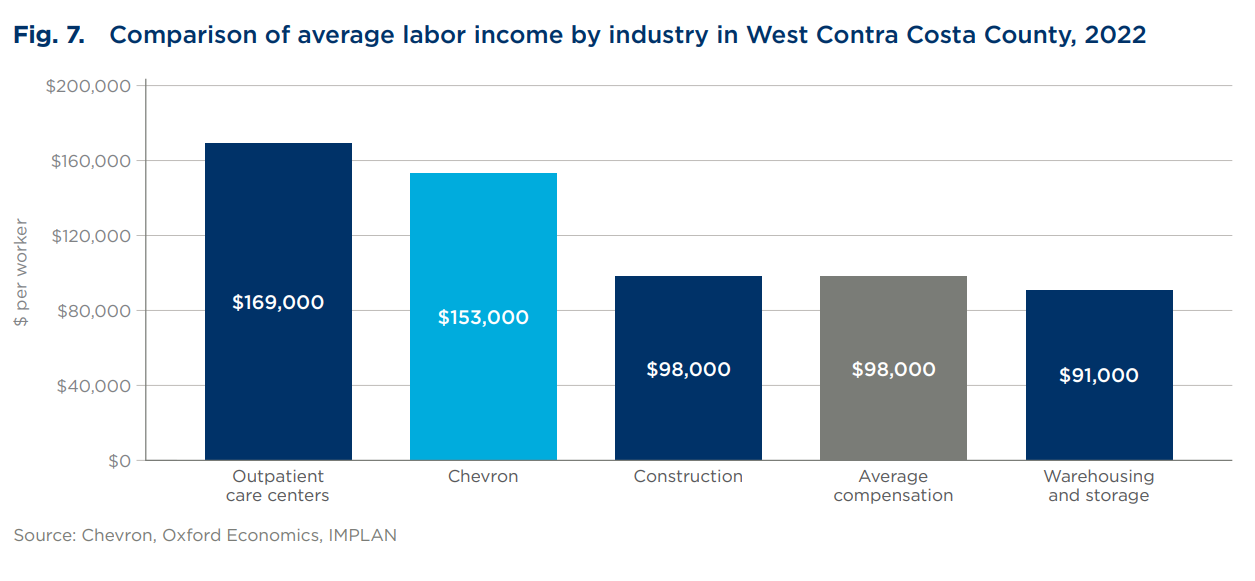
Chevron Richmond employees earn 56 percent more than the regional average and contribute 86 percent more to the local economy than the typical worker, according to the Oxford Economics study. In total, Chevron-supported jobs generated $492.5 million in labor income in 2022 alone.
Beyond wages, the report highlights the refinery’s role in local philanthropy. Chevron Richmond and its employees donated $2.1 million to nonprofits in 2022 and volunteered 4,100 hours at organizations focused on education, youth services, public safety, and community development. Since 2012, the company has contributed $52 million to local charitable causes.

Context amid refinery closures
The study comes amid growing concerns over California’s energy infrastructure. Recent announcements of refinery closures — including Valero’s Benicia facility and Phillips 66’s refinery in Los Angeles — are expected to reduce the state’s refining capacity by nearly 18 percent.
“By relying on a broad set of local businesses as part of its supply chain, supporting jobs, and stimulating economic activity, the impact of Chevron’s activities in Richmond is shown to extend well beyond its core function of producing jet fuel, gasoline, and lubricating oils,” said Alice Gambarin, lead economist at Oxford Economics and author of the report.
“Our research clearly demonstrates the significant contribution that a successful company can make to its local economy and labor market,” she added.


Call for collaboration and policy support
Tolly Graves, refinery director at Chevron Richmond, emphasized the facility’s long-term commitment to the community and warned against the consequences of mounting regulations.
“We’ve seen how regulations and policies can drive up gas prices and lead to refinery closures,” Graves said. “We need to be working together for the sake of affordable and reliable energy and the future of West Contra Costa County.”
Mark Orcutt, president and CEO of the East Bay Leadership Council, echoed the concern, saying refineries are “essential to keep California moving.”
“The threats to the state’s fuel supply are no longer hypothetical. They’re accelerating,” Orcutt said. “Every potential closure brings new risks to reliability, affordability, and jobs.”
He called on state leaders to “assess the full economic and social impact of shrinking refining capacity and ensure energy manufacturers have a seat at the table when planning California’s energy future.”
For local business owners like DeSimoni, the refinery’s continued operation is vital.
“The city’s collective success and prosperity is intertwined,” he said. “Richmond needs these businesses, and we need a business-friendly city.”