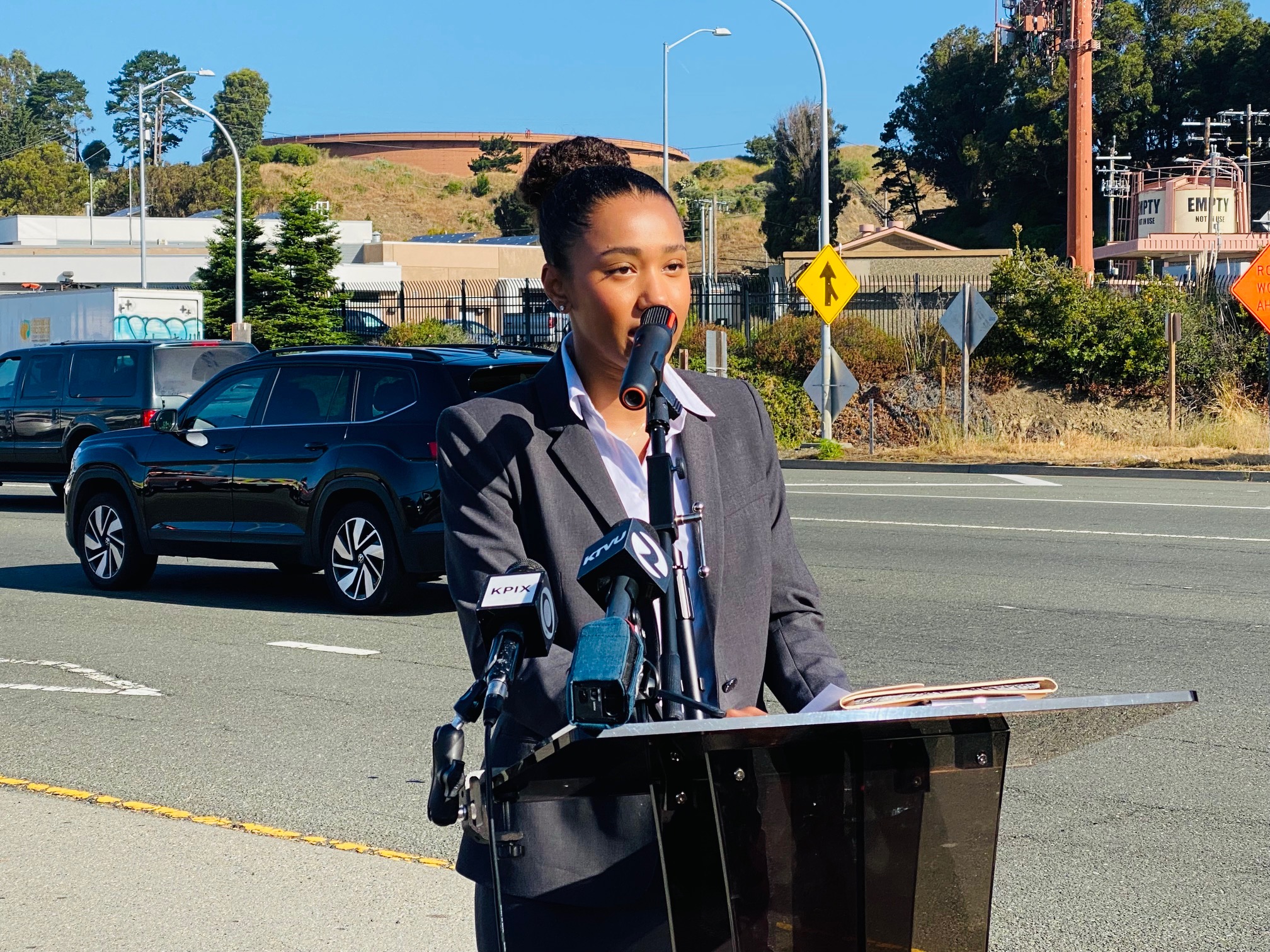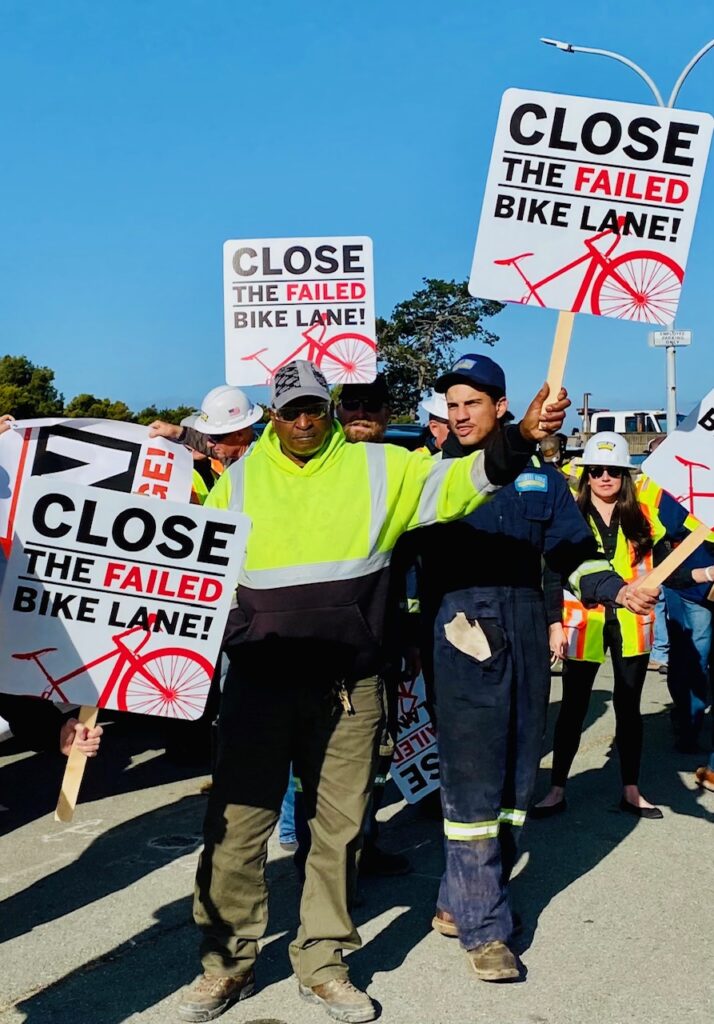
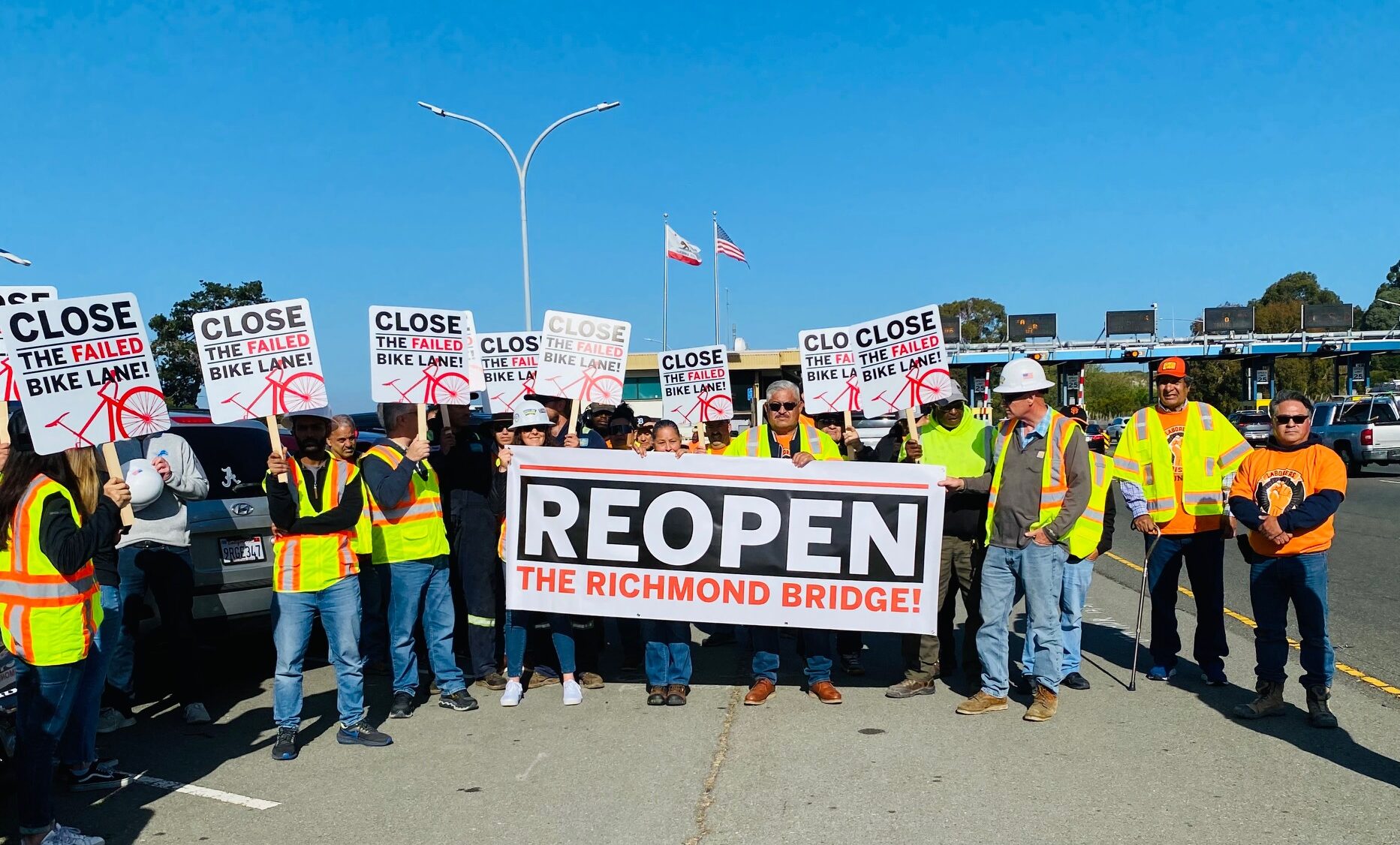
A chorus of frustrated commuters, union leaders, elected officials, and business owners gathered at the Richmond-San Rafael Bridge toll plaza Wednesday morning to call for the immediate reopening of a third westbound lane currently reserved for bicycles, with one union leader declaring, “Enough is enough.”
“They tried this idea, it failed,” said Joshua Arce of the Northern California Laborers Union, which represents 30,000 workers statewide.
“They tried this idea, it failed.”
The lane was converted into a bike path in 2019 and has been a point of contention among East Bay commuters who argue that it worsens traffic congestion, delays emergency response times, and disproportionately impacts working-class residents in Richmond and other East Bay neighborhoods. They say they’d like to be treated like commuters traveling from Marin County, who received a third vehicular lane in the eastbound direction in 2018 to ease congestion.
Public safety concerns
Nearly 80,000 vehicles cross the bridge per day, compared with about 113 bicycle trips per weekday and 335 bicycle trips during a weekend day. An average of 32 pedestrians cross the bridge daily, and an average of 98 cross on a weekend day. While the bridge bike lane offers an extension of the San Francisco Bay Trail, critics say it comes at the expense of traffic backups that extend well into Richmond. The bike lane takes away what once was a shoulder lane for broken-down vehicles.
“Since the inclusion of the multi-use bike path, there has been a 33 percent increase in traffic incidents during the morning commute,” Marin County Supervisor Brian Colbert said. “Emergency vehicles and law enforcement struggle to clear accidents and restore normal traffic flows on the two-lane highway.” He added that the traffic buildup contributes to “poor air quality due to increased pollutants from idling vehicles.”
Don Nelson, vice president of the Richmond Police Officers Association (RPOA), echoed the public safety concerns, saying the problem “is no longer a matter of inconvenience.” He recalled a recent crash during which a car flipped over in the westbound lanes.

“As more individuals return to in-person work, the congestion on the bridge has become a growing public safety issue,” Nelson said. “The consistent delays faced by vehicles attempting to cross, combined with the lack of an emergency lane on the upper deck, significantly hinder the ability of emergency responders to reach those in need quickly and safely.”
Compromise proposed
For these reasons and more, Joe Fisher, president of the Coronado Neighborhood Council in Richmond, believes the bike lane should be closed – at least when there is a lot of traffic. He advocates for closing the bike lane during commute hours and keeping it open on the weekends.
“This is a very excellent compromise for all parties involved,” Fisher said.
That very compromise was recently proposed by the Metropolitan Transportation Commission (MTC) and the Bay Area Toll Authority (BATA). The proposal would convert the bike lane into a breakdown shoulder from Monday through Thursday, while maintaining its use as a bike and pedestrian path on Fridays, weekends and holidays. The proposal requires approval from the San Francisco Bay Conservation and Development Commission (BCDC), which oversees public access to the bay. The BCDC was expected to consider the proposal at its April 3 meeting, but the hearing was postponed to a later date to allow for amendments. It is expected the issue will come back to BCDC in July or August.
Cycling advocacy groups and other advocates of the bike lane cheered the postponement. They oppose the proposed compromise, arguing closing the lane will eliminate access for people who do not drive and who rely on the bridge.
“It is short-sighted for decision-makers to exclusively prioritize cars over other modes of transportation, especially in the face of a climate crisis,” reads Bike East Bay’s statement on the proposal.
Economic impact
Warren Wells, policy and planning director for the Marin County Bicycle Coalition, said commuters have changed their lifestyles since the bike lane’s opening, purchasing e-bikes to make the crossing and exploring more of the region, which provides economic benefits on both sides.
“This is the power of giving people alternatives, in this case, building a biking and walking route where none existed prior,” Wells said at a February BCDC meeting.
However at Wednesday’s press conference, attendees said the bike lane is hurting the economy.
“This is a huge impact to [drivers] and to their families, compromising their quality of life and wasting five to six hours a week that they could be spending with their families,” said business owner Mike Ghilotti, president of Ghilotti Bros.
Lauren Goode, a Richmond resident and policy associate at the Bay Area Council, describes the issue as a racial and economic equity policy failure. The majority of commuters headed to work from the East Bay to the North Bay are people of color, she said.
“There was a third lane reopened on the lower deck [for Marin], that was successful,” Goode said. “We are asking for the same thing here in Richmond.”
Kathy Chouteau and Mike Kinney contributed to this report