
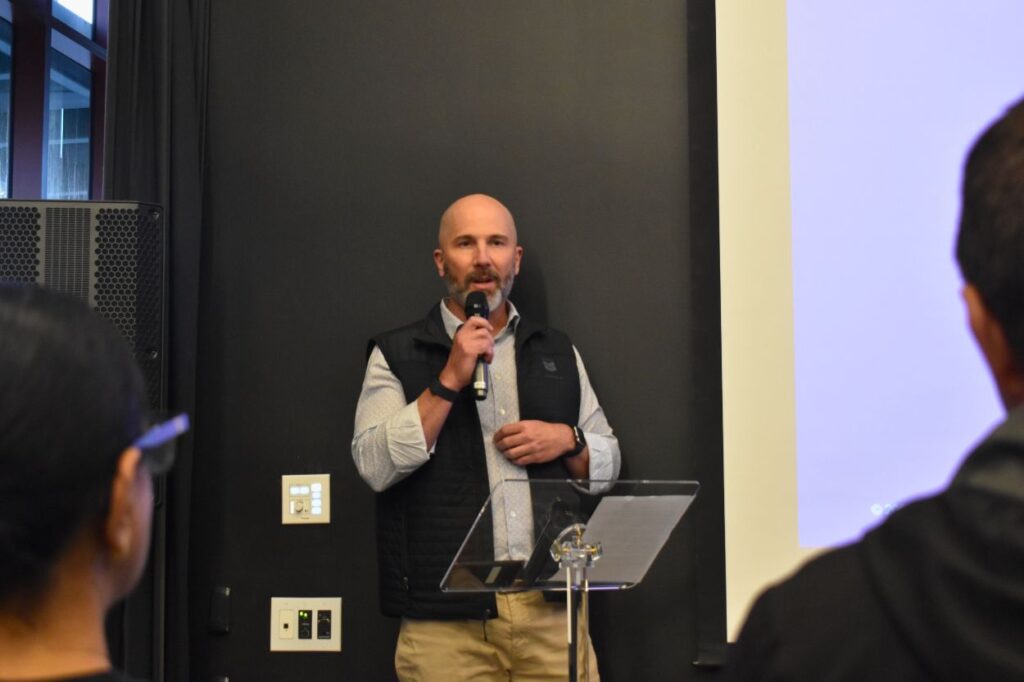
Chevron Richmond rolled out a wave of new announcements aimed at shrinking its environmental footprint and deepening its conversation with the community at its third Community Action Plan (CAP) town hall on Wednesday, Oct. 22.
Taking the lead: a batch of fresh community health and home-improvement programs, plus stronger transparency around flaring and emissions.
First up: Chevron revealed a partnership with LifeLong Medical Care to train 15-20 “asthma health promoters” from neighborhoods near the refinery. These trained advocates will work directly with families, help develop medical action plans, and deliver home-trigger-reduction tools (humidifiers, non-toxic cleaning kits) to households in fence-line neighborhoods.
Then the company announced it will team up with MCE Clean Energy on a “Home Energy Saving Program” for Atchison Village, the Iron Triangle, North Richmond and other nearby communities. The program will upgrade attics, seal air-ducts, install efficient space-heaters and smart thermostats to reduce indoor pollutants, lower utility bills and cut greenhouse-gas emissions.
On the operations side, Chevron Richmond spotlighted ongoing efforts to reduce flaring and ramp up monitoring. That includes the new “Flare.IQ” automation system, boosted operator training and a monthly cross-functional “flare team” that investigates past events and spots improvement opportunities.
In addition, tens of millions in infrastructure investments are already committed, with more to come, officials said.
Flaring reduction is ‘top priority’
Chevron Richmond Director Tolly Graves told town hall attendees that reducing flaring is “one of my top priorities.” He said when he took on the role as director in January 2022, he was challenged by his corporate manager to push harder in this area.
“It’s a big deal to us, and we’re working on it,” Graves said. “We put real resources into it, and I think the results are starting to show. But we’re not done yet.”
According to Chevron’s public data, particulate matter emissions have dropped about 36 percent since 2018. For the six-month period from April 1 to Sept. 30 this year, there were seven flaring events — the same number as the previous six months. If the trend continues, Chevron will finish 2025 with fewer than half the number of flaring events it had in 2024, officials said.
During the town hall, Chevron Richmond also encouraged residents to visit the revamped air monitoring website that provides real-time fence-line air-monitoring data and access to downloadable historical reports.
Background on CAP
The event was the third CAP town hall, part of the 2024 agreement between Chevron and the Bay Area Air District (BAAD) aiming to improve flaring performance, community engagement and transparency. The town halls are held every six months and are guided by a steering committee of community members.
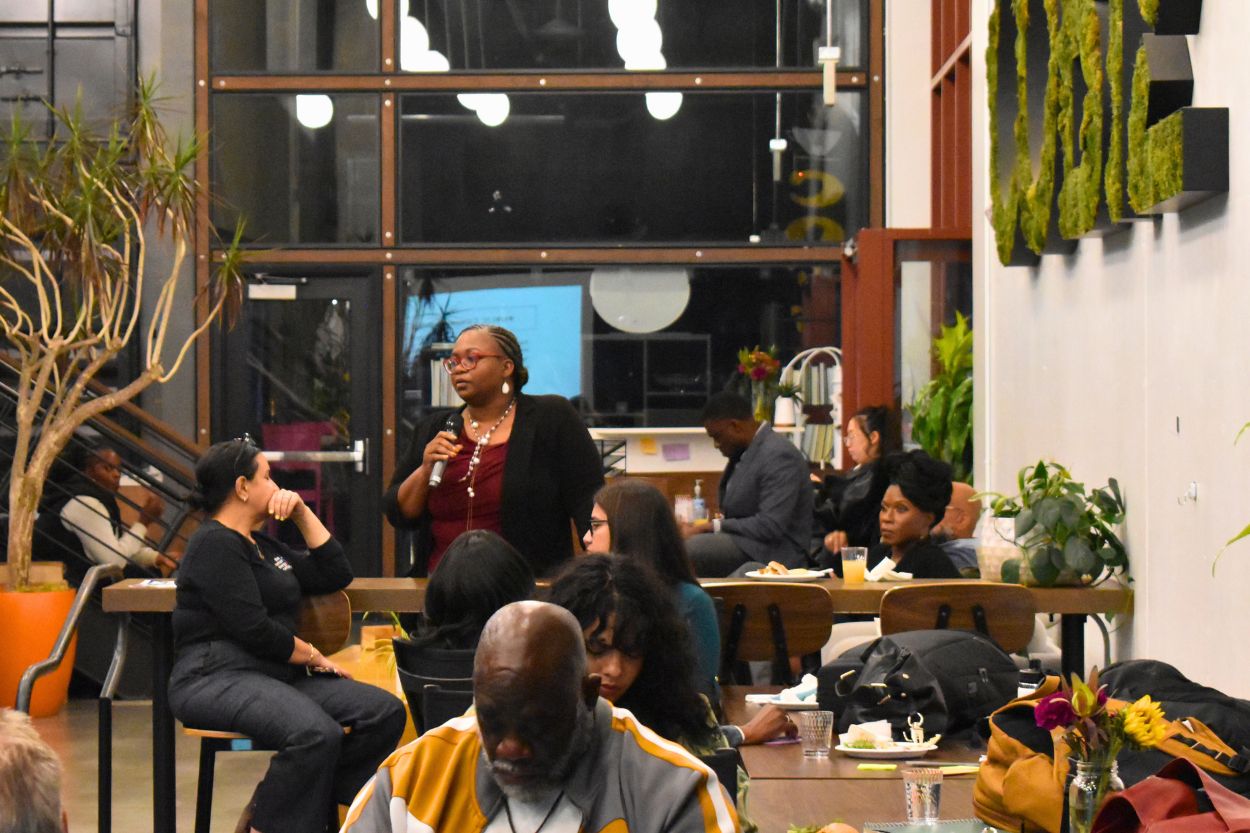

“And I’ll tell you, from my experience, I have a much better understanding than I did two years ago, three years ago, about what Chevron does,” Jones said, adding, “We hope to keep working together to bring forward more information, transparency and just plain old trust.”
Public health, emergency-response officials participate
Local health and emergency-response leaders also spoke at Wednesday’s town hall, including Tony Semenza (executive director of Contra Costa CAER — Community Awareness & Emergency Response), Nicole Heath (director of hazardous materials for Contra Costa Health) and Edward Giacometti (manager of Compliance & Enforcement at BAAD).
Heath described her division’s work with the county’s HazMat Incident Response Team, staffed 24/7, which handles incidents from facility chemical releases to transportation spills. She explained how a revised incident-notification policy in 2021 raised the number of reported flaring events at Chevron Richmond. She also walked through the four-level Community Warning System (CWS).
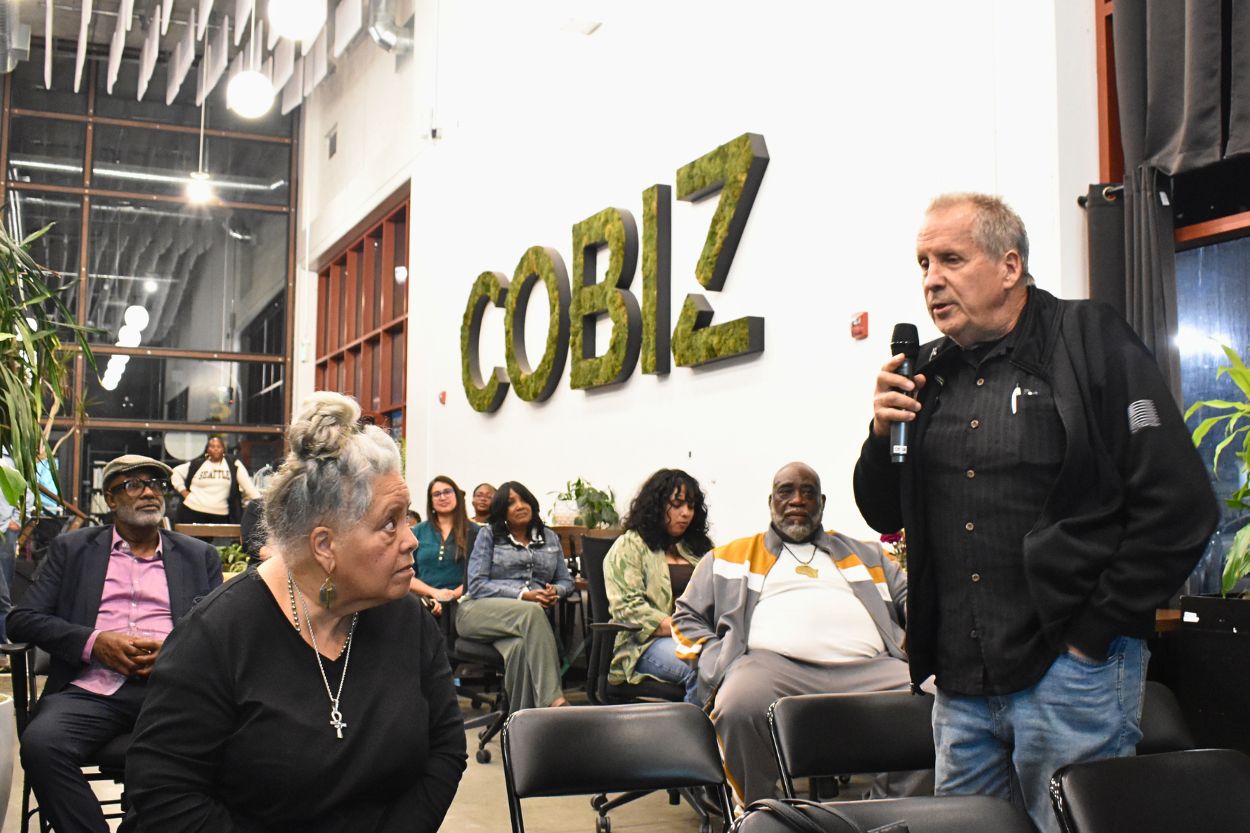
Semenza emphasized CAER’s role as a long-standing bridge between industry, government and communities, explaining how the organization helped build the CWS with industry dollars. He described its mission to build trust through outreach, siren alerts and education in Richmond and beyond, noting that if you hear a siren (outside the monthly test), you must shelter in place.
For regular testing, “sirens are sounded the first Wednesday of the month, 11 o’clock,” Semenza said. “In a real emergency, it sounds for three minutes, and then every half hour afterwards, another three minutes. That will go on until the public emergency has ended.”
Brian Hubinger, Chevron Richmond manager of corporate affairs, expressed gratitude to the public health and emergency officials who participated, noting he invited them at the request of the community.
“Feedback is important to me,” Hubinger said. “We look forward to hearing what else you want to talk about, so that we can bring in other speakers, or bring in our experts to have those conversations. So keep the ideas coming.”