
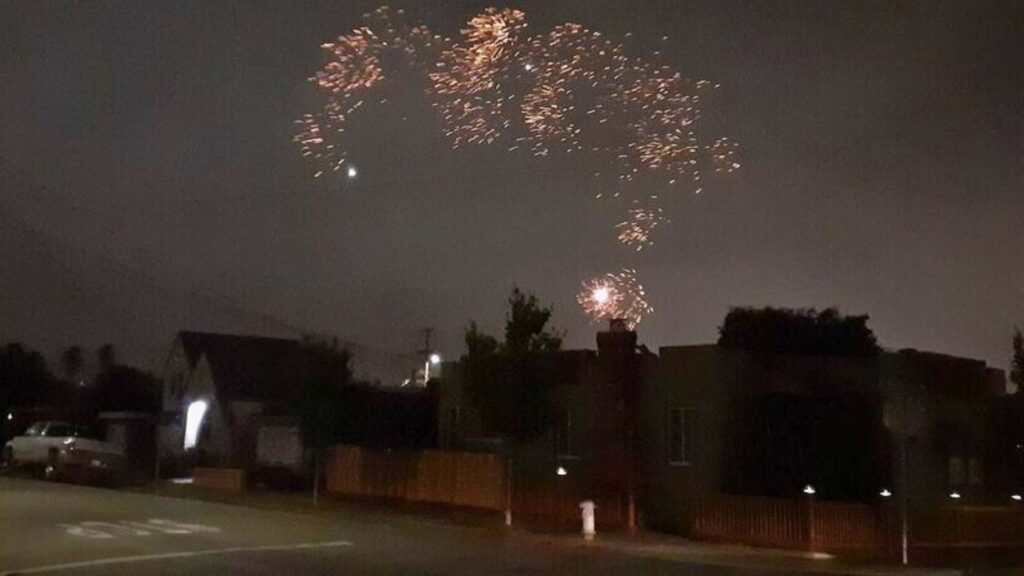
As summer approaches, Richmond officials are intensifying efforts to combat the widespread use of illegal fireworks, citing not only fire danger but also serious environmental and public health impacts.
At the April 29 City Council meeting, councilmembers, residents, and public safety leaders voiced frustration over the long-standing issue, which spikes every year around the Fourth of July and New Year’s. Questions remain on exactly how the city should respond.
At the Council meeting, a proposal to triple fines for those using illegal fireworks in high-risk fire zones was tabled so that the issue can be discussed further. Earlier this year, the Council rejected a proposal for city-sanctioned drone light shows as an alternative to fireworks due to cost concerns.
Councilmember Soheila Bana, who presented both of those ideas to the Council, said increasing fines might not be a “silver bullet,” as illegal fireworks are difficult to enforce, particularly with a defunded police department. But she says it is one tool the city could use to address what she described as a serious public safety concern.
“It shows our determination,” Bana said.
Pollution
Despite the annual city-sanctioned Independence Day fireworks show occurring just off Richmond’s waterfront, non-sanctioned fireworks use occurs throughout the city during the summer holiday period and beyond. Incessant explosions frighten dogs, traumatize combat veterans and threaten damage to property and cause injury or death.
Local air quality monitoring shows that fireworks are a major source of particulate matter pollution.
Illegal fireworks also pose health concern. Local air quality monitoring shows that fireworks are a major source of particulate matter pollution (PM2.5) — tiny airborne particles linked to asthma, heart disease, and even premature death.
As the Standard reported in 2021, air monitoring data shows pollution from fireworks, wildfires and vehicular traffic pose a greater health concern to local residents than industrial sources, including the Richmond Refinery. The air monitoring data is sourced from a quarterly reporting of criteria air pollutants and toxic air contaminants, part of the state-mandated California Air Protection Program (CAPP). Greg Nudd, deputy Bay Area Air Quality Management District, noted there is a difference between emissions of particulate matter and exposure to particulate matter. Emissions are the direct release of pollutants into the atmosphere and are measured as the total mass of the substance released. Exposures indicate how much of these pollutants are actually inhaled or absorbed by individuals.
“If you just draw a map around Richmond, about 90 percent of the PM emissions are from Chevron,” the deputy manager said. “But if you look at exposure, about 80 percent of the PM exposure in Richmond is from sources other than Chevron.”
Those other sources can include traffic, smoke from wildfires and rampant fireworks use. Air monitors placed throughout the city’s neighborhoods and industrial centers reveal those spikes. According to July 4, 2024, monitoring data, North Richmond recorded PM2.5 levels as high as 42 µg/m³, exceeding typical industrial flaring events and approaching levels considered unhealthy for sensitive groups. PBS NewsHour reports that nationwide, fireworks increase daily air pollution levels by 42 percent on average during Independence Day celebrations.
“When people think of air pollution, they think of other kinds of things—smoke stacks, automobile exhaust pipes, construction sites,” said Dian J. Seidel, author of the study on the effects of Independence Day fireworks on PM levels in the U.S., in a TIME report. “I don’t think most people think of fireworks.”
Safety
Fireworks-related injuries send an average of 230 Americans to the emergency room every day in the month around July 4, according to the U.S. Consumer Product Safety Commission. In 2023, eight people died and about 9,700 people were treated at ERs due to these injuries. Forty-two percent of those injuries involved burns.
Richmond resident Don Gosney knows all too well about the dangers of illegal fireworks. Errant illegal fireworks that were being set off in his neighborhood could have killed him and burned down his home.
“One landed in a five-gallon plastic bucket with a propane bottle from plumbing soldering work I was doing,” Gosney said during public comment at the City Council meeting. “Next thing I know, flames are shooting up from my patio 45 feet in the air.”

Gosney suffered burns to his feet, legs and hands.
“My lungs were filled with toxins from the burning plastic,” he said.
The mishap caused by unknown users of illegal fireworks ultimately also cost him tens of thousands of dollars that “came directly out of my pocket.”
But Gosney is skeptical that heightened enforcement measures like tripling fines will make a difference, noting the trouble with catching perpetrators in the act, particularly with an understaffed police department.
“Fire fines are a feel-good measure, but I fear that they won’t make a bit of difference in stopping illegal fireworks,” Gosney said.
Search for solutions
Councilmember Bana has been on a mission to prevent wildfires in vulnerable areas of the city, such as neighborhoods adjacent to Wildcat Canyon Regional Park.

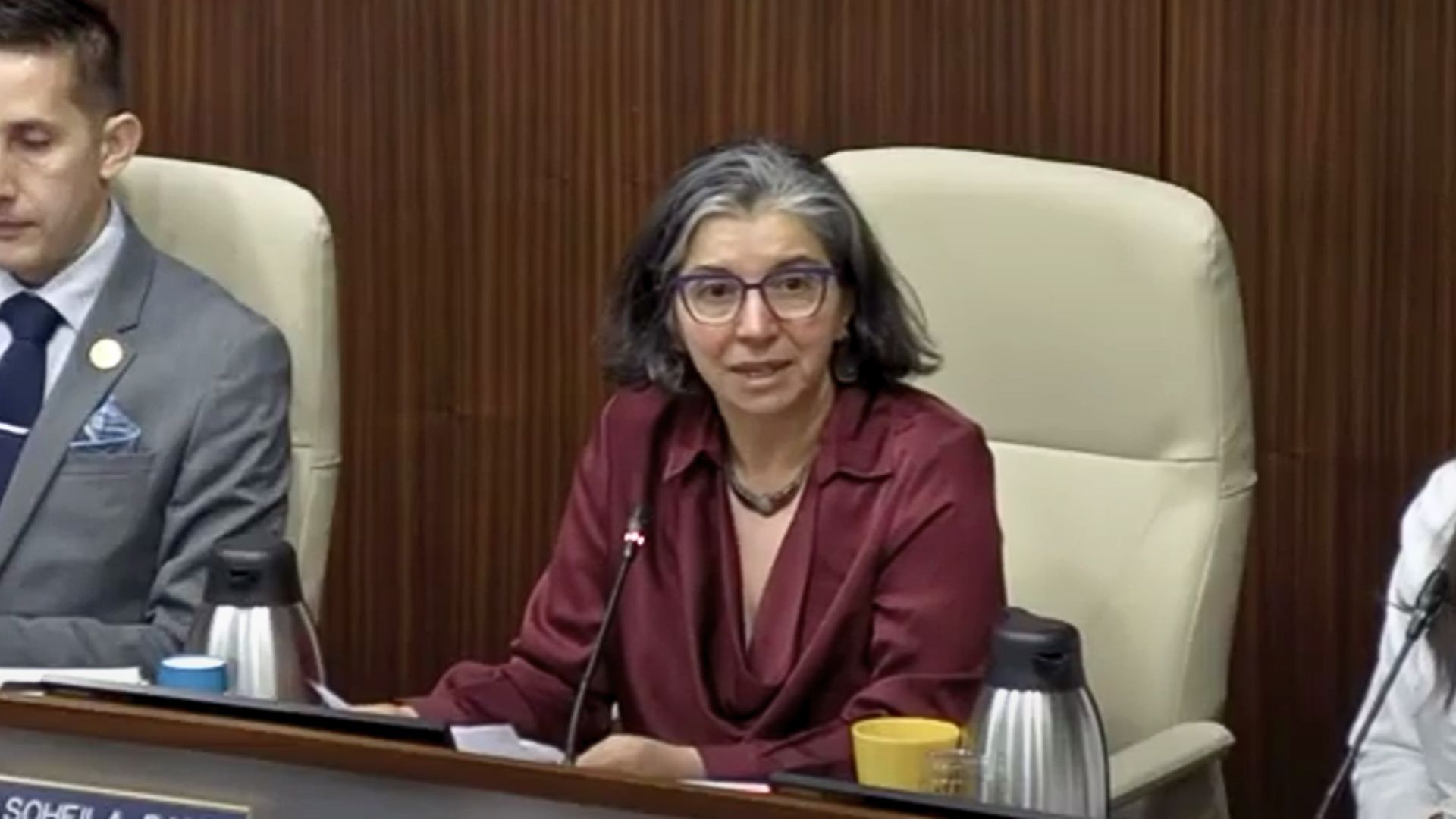
She noted one of the L.A. fires was ignited by a firework that reignited. “I want to minimize the possibility of a major fire in Richmond caused by illegal fireworks.”
Richmond Fire Chief Aaron Osorio said the bulk of fireworks-related calls are not in high fire risk zones, but in areas like North Richmond, Southside and North & East. For this reason, he calls for a citywide approach to addressing the problem.
Julie Freestone, a longtime Richmond resident and founder of the new Stop Illegal Fireworks (SIF) group, called the situation “a citywide crisis” and pushed for public education campaigns and community-based signage. Her group has window signs available on its website — sifrichmondca.org — that people can print and post to support community education.
“We only have two months to go to get our plans in place and work all together to stop illegal fireworks,” Freestone said.
What the city is doing
After a lengthy debate, the Council unanimously approved a motion on April 29 directing city staff, including the fire, police, legal, and public works departments, to work with residents and return with comprehensive policy recommendations.
Both the Richmond police and fire chiefs said they are already coordinating on strategies that include enforcement (adding patrols and strengthening penalties with support from the city attorney), a citywide education campaign using social media, school outreach and signage, and the use of joint response teams and proper evidence-handling protocols.
Councilmember Sue Wilson said the city is not in a position to fix the fireworks problem through citations. She wants the city to advocate at the state and federal level to stop imports of illegal fireworks into the U.S. from China through Mexico and Nevada.
“I want us to focus as a city on using our limited resources to take steps that are really going to help curb the fireworks problem,” Wilson said.
Freestone says an “all-hands-on-deck approach” is needed to adequately address the problem.